Vaccinium parvifolium (Red Huckleberry)
Red Huckleberry is a multi-stemmed deciduous shrub with an upright spreading habit of growth. Its relatively fine texture sets it apart from other landscape plants with less refined foliage.
This is a relatively low maintenance shrub, and usually looks its best without pruning, although it will tolerate pruning. It is a good choice for attracting birds to your yard. It has no significant negative characteristics.
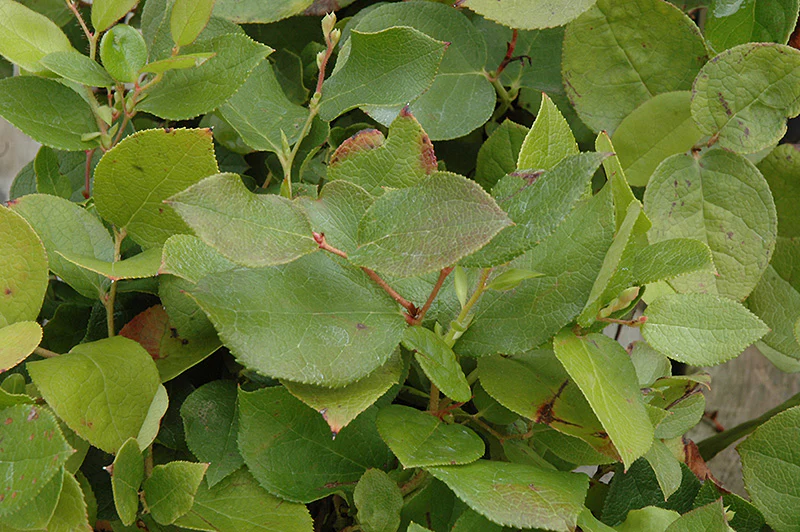
Red Huckleberry is primarily grown for its highly ornamental fruit. It features an abundance of magnificent red berries in mid summer. It features dainty clusters of white bell-shaped flowers with shell pink overtones hanging below the branches in mid spring. It has green foliage with light green undersides. The oval leaves do not develop any appreciable fall colour. The smooth gray bark adds an interesting dimension to the landscape.
This plant is primarily grown as an ornamental, but it's also valued for its edible qualities. The small round sour berries are most often used in the following ways:
Red Huckleberry will grow to be about 10 feet tall at maturity, with a spread of 6 feet. It tends to be a little leggy, with a typical clearance of 1 foot from the ground, and is suitable for planting under power lines. It grows at a medium rate, and under ideal conditions can be expected to live for approximately 30 years. While it is considered to be somewhat self-pollinating, it tends to set heavier quantities of fruit with a different variety of the same species growing nearby.
This shrub does best in full sun to partial shade. It does best in average to evenly moist conditions, but will not tolerate standing water. It is very fussy about its soil conditions and must have sandy, acidic soils to ensure success, and is subject to chlorosis (yellowing) of the foliage in alkaline soils. It is quite intolerant of urban pollution, therefore inner city or urban streetside plantings are best avoided, and will benefit from being planted in a relatively sheltered location. Consider applying a thick mulch around the root zone in winter to protect it in exposed locations or colder microclimates. This species is native to parts of North America.
Original: $8.02
-70%$8.02
$2.41Vaccinium parvifolium (Red Huckleberry)
Red Huckleberry is a multi-stemmed deciduous shrub with an upright spreading habit of growth. Its relatively fine texture sets it apart from other landscape plants with less refined foliage.
This is a relatively low maintenance shrub, and usually looks its best without pruning, although it will tolerate pruning. It is a good choice for attracting birds to your yard. It has no significant negative characteristics.
Red Huckleberry is primarily grown for its highly ornamental fruit. It features an abundance of magnificent red berries in mid summer. It features dainty clusters of white bell-shaped flowers with shell pink overtones hanging below the branches in mid spring. It has green foliage with light green undersides. The oval leaves do not develop any appreciable fall colour. The smooth gray bark adds an interesting dimension to the landscape.
This plant is primarily grown as an ornamental, but it's also valued for its edible qualities. The small round sour berries are most often used in the following ways:
Red Huckleberry will grow to be about 10 feet tall at maturity, with a spread of 6 feet. It tends to be a little leggy, with a typical clearance of 1 foot from the ground, and is suitable for planting under power lines. It grows at a medium rate, and under ideal conditions can be expected to live for approximately 30 years. While it is considered to be somewhat self-pollinating, it tends to set heavier quantities of fruit with a different variety of the same species growing nearby.
This shrub does best in full sun to partial shade. It does best in average to evenly moist conditions, but will not tolerate standing water. It is very fussy about its soil conditions and must have sandy, acidic soils to ensure success, and is subject to chlorosis (yellowing) of the foliage in alkaline soils. It is quite intolerant of urban pollution, therefore inner city or urban streetside plantings are best avoided, and will benefit from being planted in a relatively sheltered location. Consider applying a thick mulch around the root zone in winter to protect it in exposed locations or colder microclimates. This species is native to parts of North America.
Product Information
Product Information
Shipping & Returns
Shipping & Returns
Description
Red Huckleberry is a multi-stemmed deciduous shrub with an upright spreading habit of growth. Its relatively fine texture sets it apart from other landscape plants with less refined foliage.
This is a relatively low maintenance shrub, and usually looks its best without pruning, although it will tolerate pruning. It is a good choice for attracting birds to your yard. It has no significant negative characteristics.
Red Huckleberry is primarily grown for its highly ornamental fruit. It features an abundance of magnificent red berries in mid summer. It features dainty clusters of white bell-shaped flowers with shell pink overtones hanging below the branches in mid spring. It has green foliage with light green undersides. The oval leaves do not develop any appreciable fall colour. The smooth gray bark adds an interesting dimension to the landscape.
This plant is primarily grown as an ornamental, but it's also valued for its edible qualities. The small round sour berries are most often used in the following ways:
Red Huckleberry will grow to be about 10 feet tall at maturity, with a spread of 6 feet. It tends to be a little leggy, with a typical clearance of 1 foot from the ground, and is suitable for planting under power lines. It grows at a medium rate, and under ideal conditions can be expected to live for approximately 30 years. While it is considered to be somewhat self-pollinating, it tends to set heavier quantities of fruit with a different variety of the same species growing nearby.
This shrub does best in full sun to partial shade. It does best in average to evenly moist conditions, but will not tolerate standing water. It is very fussy about its soil conditions and must have sandy, acidic soils to ensure success, and is subject to chlorosis (yellowing) of the foliage in alkaline soils. It is quite intolerant of urban pollution, therefore inner city or urban streetside plantings are best avoided, and will benefit from being planted in a relatively sheltered location. Consider applying a thick mulch around the root zone in winter to protect it in exposed locations or colder microclimates. This species is native to parts of North America.